350 sq ft flagstone patio built to handle hillside drainage
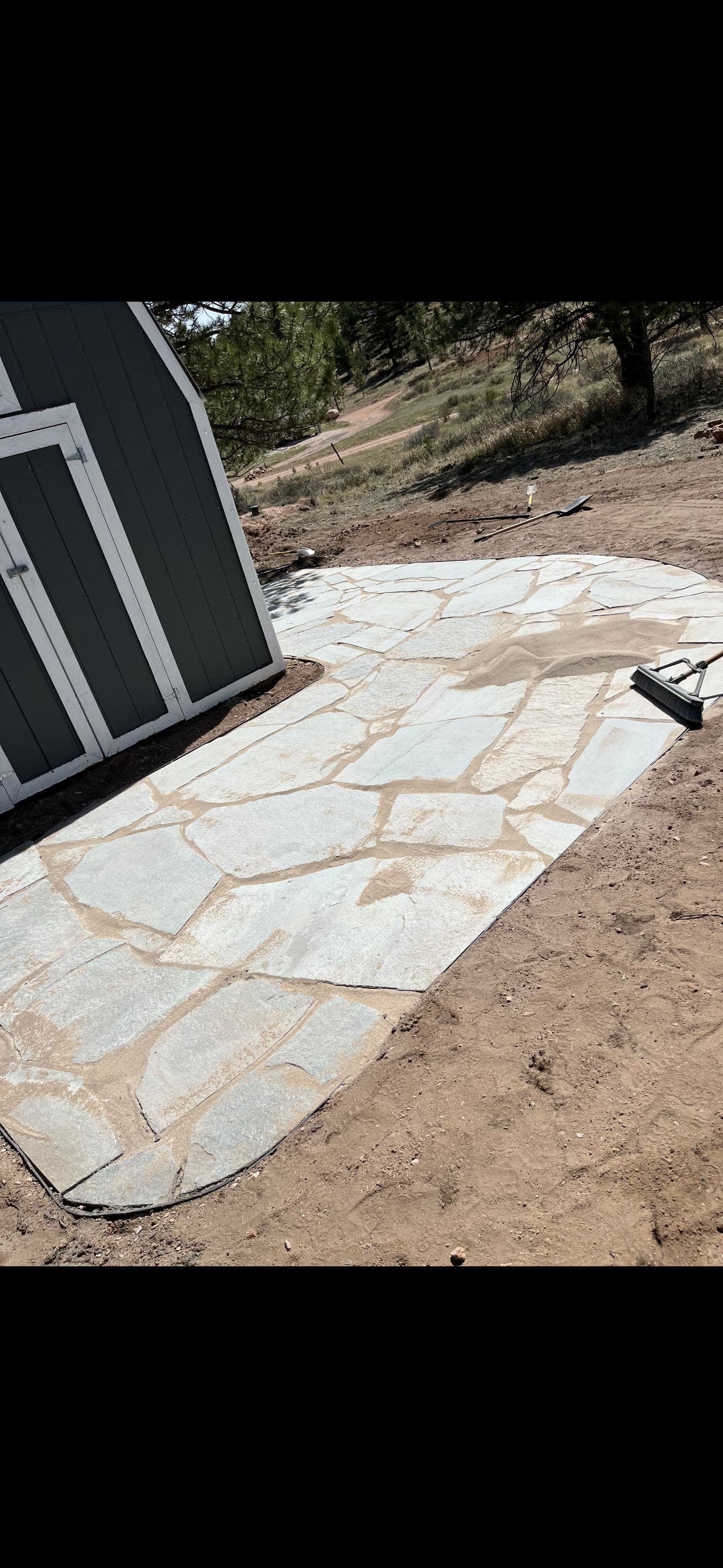
Some jobs look straightforward on paper until you show up and realize the site has its own set of challenges. This 350 sq ft flagstone patio was going in at the bottom of a hill - which meant water management wasn't an option, it was the whole game.
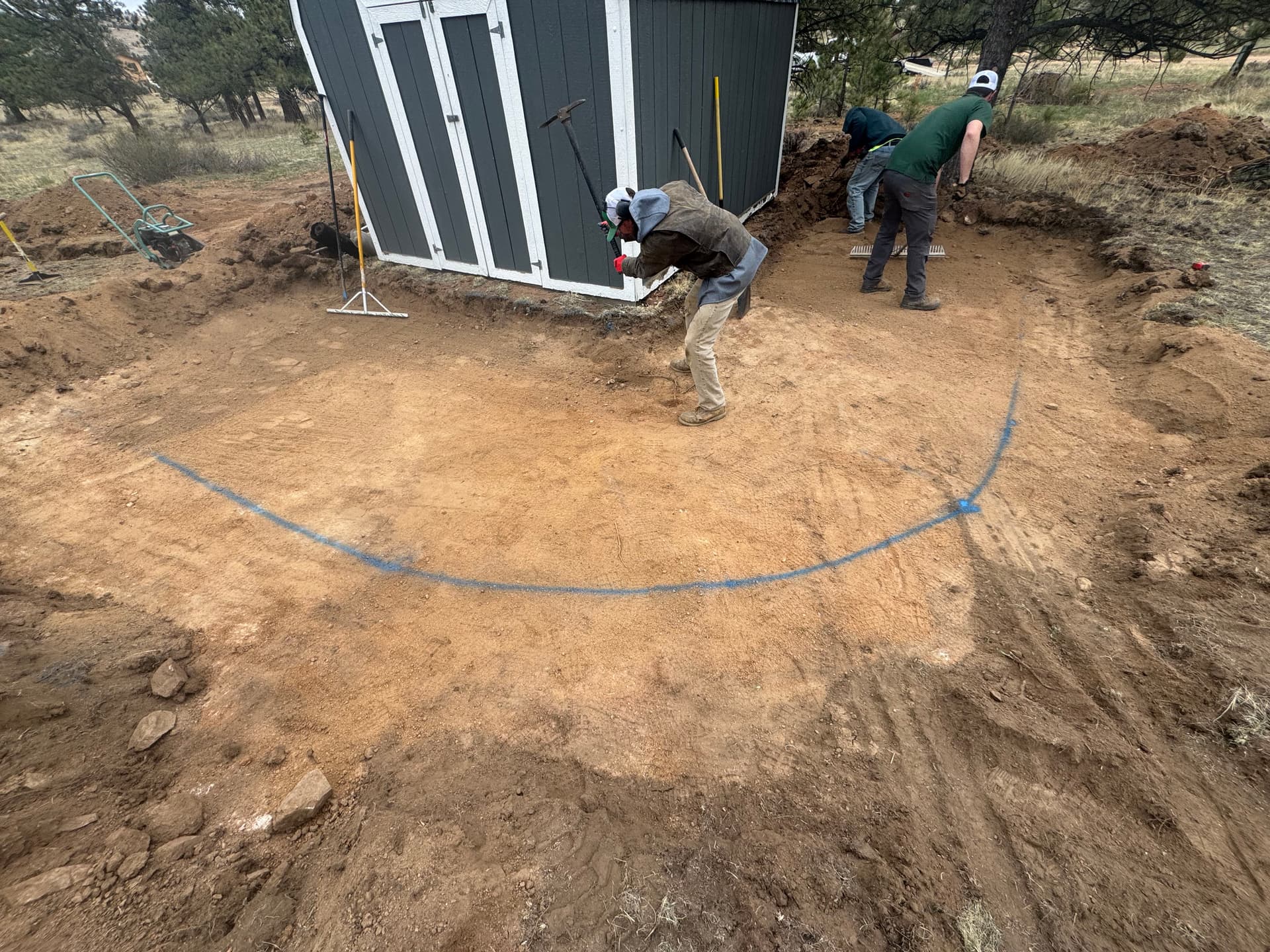
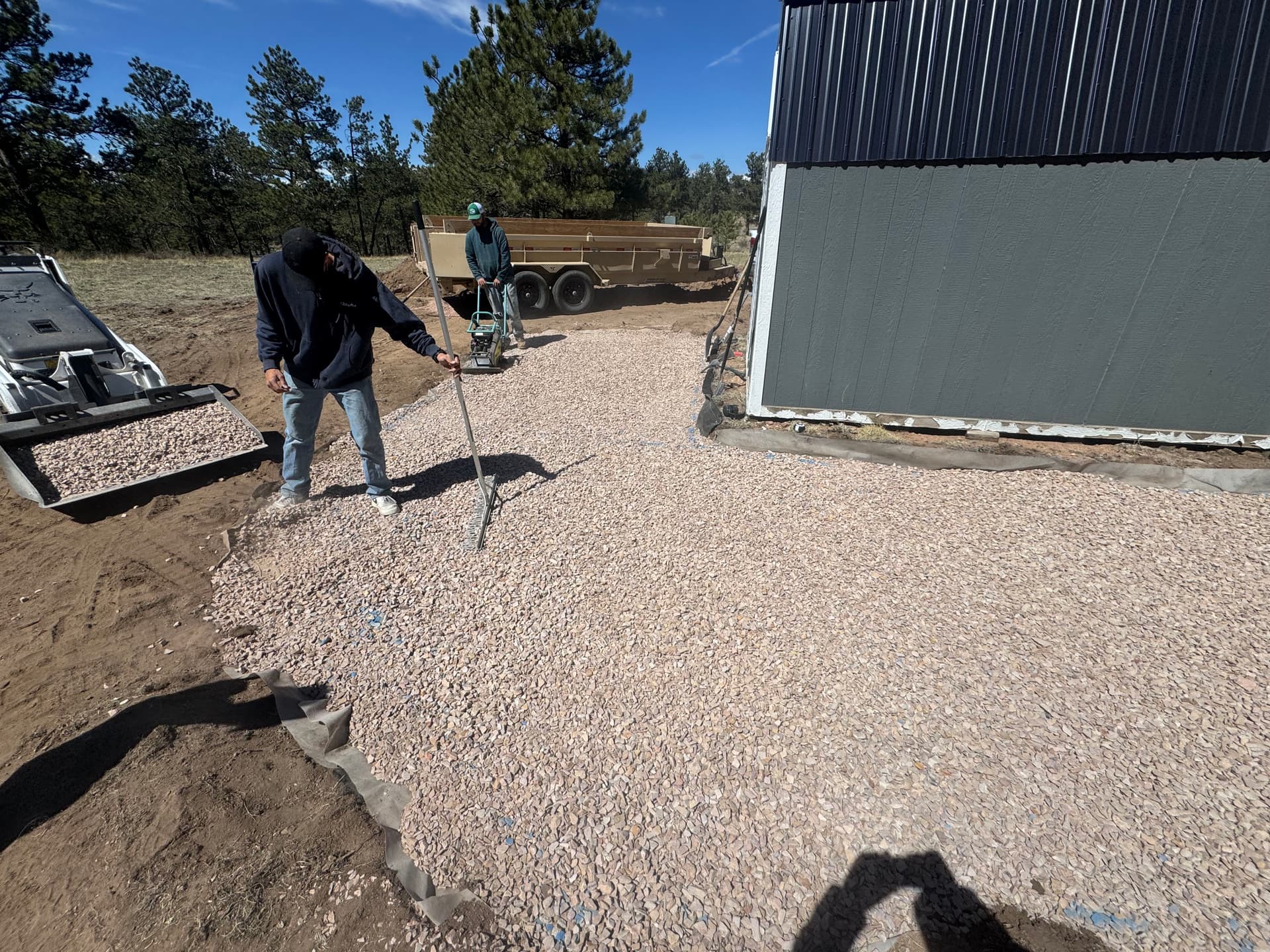
Before a single stone went down, we focused hard on the excavation and grading. The area around the shed needed to be cut back, leveled out, and prepped in a way that would actually move water away from the finished surface. That meant taking the time to do it right before any base material ever hit the ground. A plate compactor, proper gravel base, and landscape fabric all worked together to build something solid underneath.
Here's the thing about flagstone patios - the stone itself is only as good as what's beneath it. We've seen plenty of patios that look great at install and start heaving, settling, or pooling water within a season or two. That happens when the base work gets rushed. On a low-lying site like this one, we weren't willing to cut corners on that step.
The finished patio lays tight and clean, with the natural variation in the flagstone giving it a look you just can't get from poured concrete or pavers. It fits the property. It looks like it belongs there. And because the drainage and base were handled correctly from the start, it's built to hold up season after season without headaches.
That's really what hardscaping comes down to - doing the prep work that nobody sees so the finished product performs the way it should. The surface gets all the attention, but the excavation and grading underneath is what actually makes it last.